Blog 1
From College Ice to the Big Leagues
The ice hockey community is smaller than most people think; everyone seems to know everyone. Working as a photographer for Penn State Men’s Ice Hockey, I’ve been lucky to form connections that reach far beyond the college level. One of our assistant coaches even introduced me to the events presentation coordinator for the Columbus Blue Jackets.
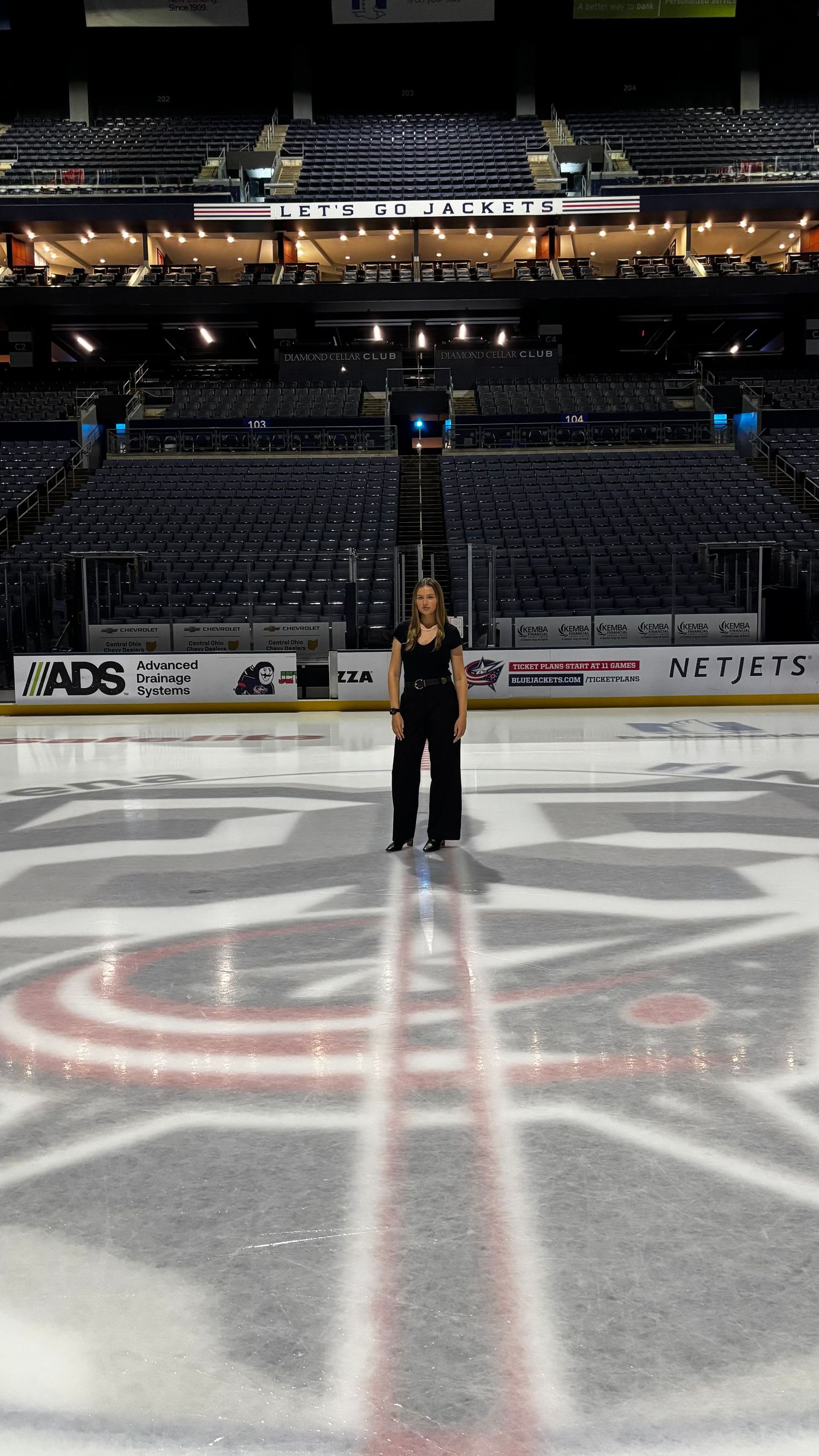
The weekend of October 31st, Penn State played an away series at Ohio State. I traveled with the team to photograph the games and arranged to meet my Blue Jackets connection while I was there.
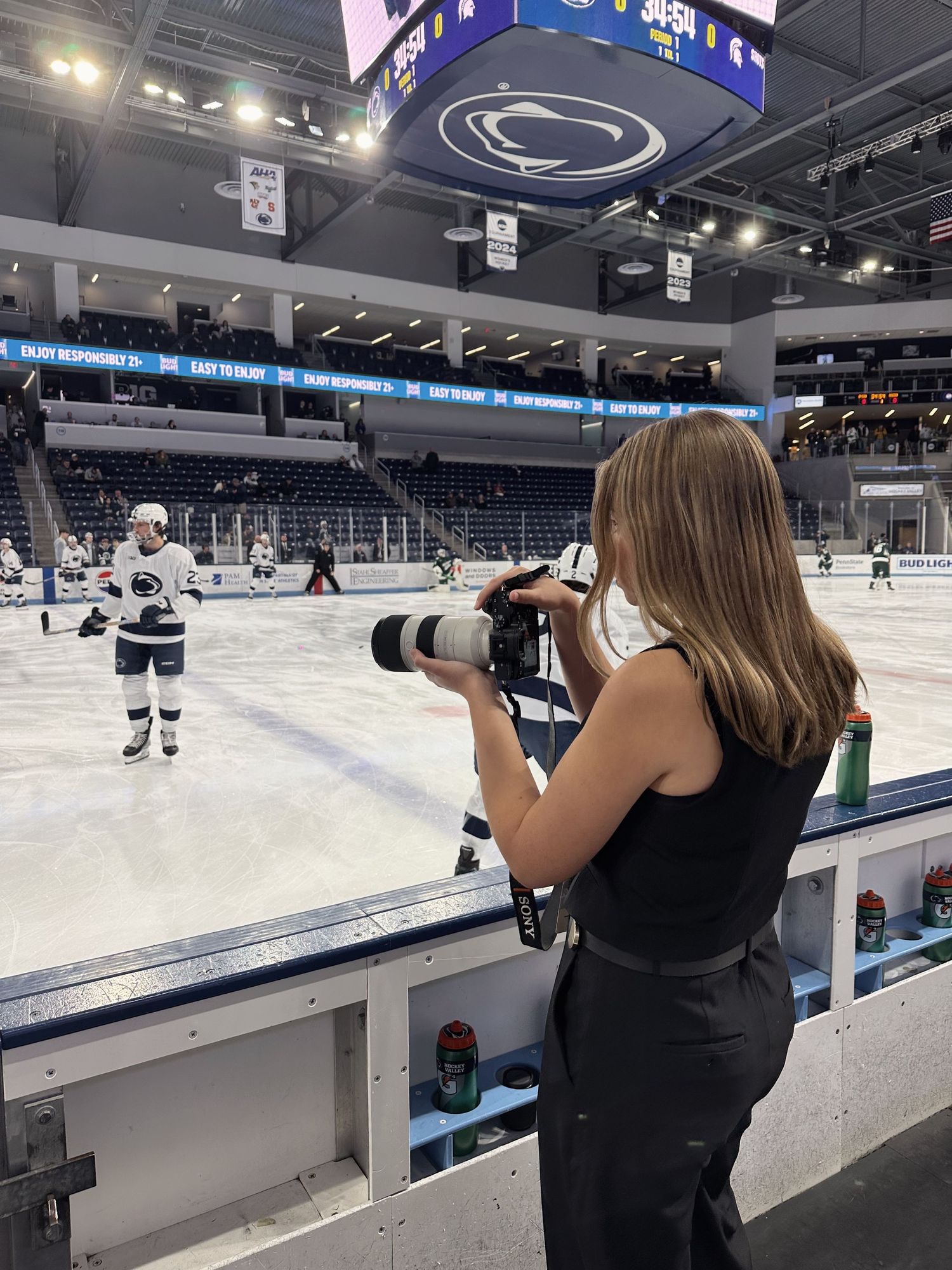
Ohio State’s arena reminded me a lot of Penn State’s: just larger and used for more than hockey. The crowd energy though, was surprisingly lower than the packed house at Pegula Ice Arena. Still, the game presentation felt familiar, and once I settled into my camera portal along the glass, it was business as usual.
Then came Saturday.
My connection got me tickets and surprised me with a credential to photograph the Blue Jackets game. It was my first time ever shooting at the professional level. During warmups, I was able to shoot through a camera portal, but once the game began, I photographed through the glass.
The difference between college and professional hockey was an immediate realization for me. The pace was faster, the sound was louder, and the lighting was brighter. Everything felt amplified. I quickly realized that while it’s the same sport, photographing it requires a completely different rhythm and awareness.
That night taught me how much more there is to learn and how each level of the game brings its own challenges. It was a humbling and inspiring reminder that growth happens when you step out of your comfort zone.
Blog 2
Being a Woman in Sports
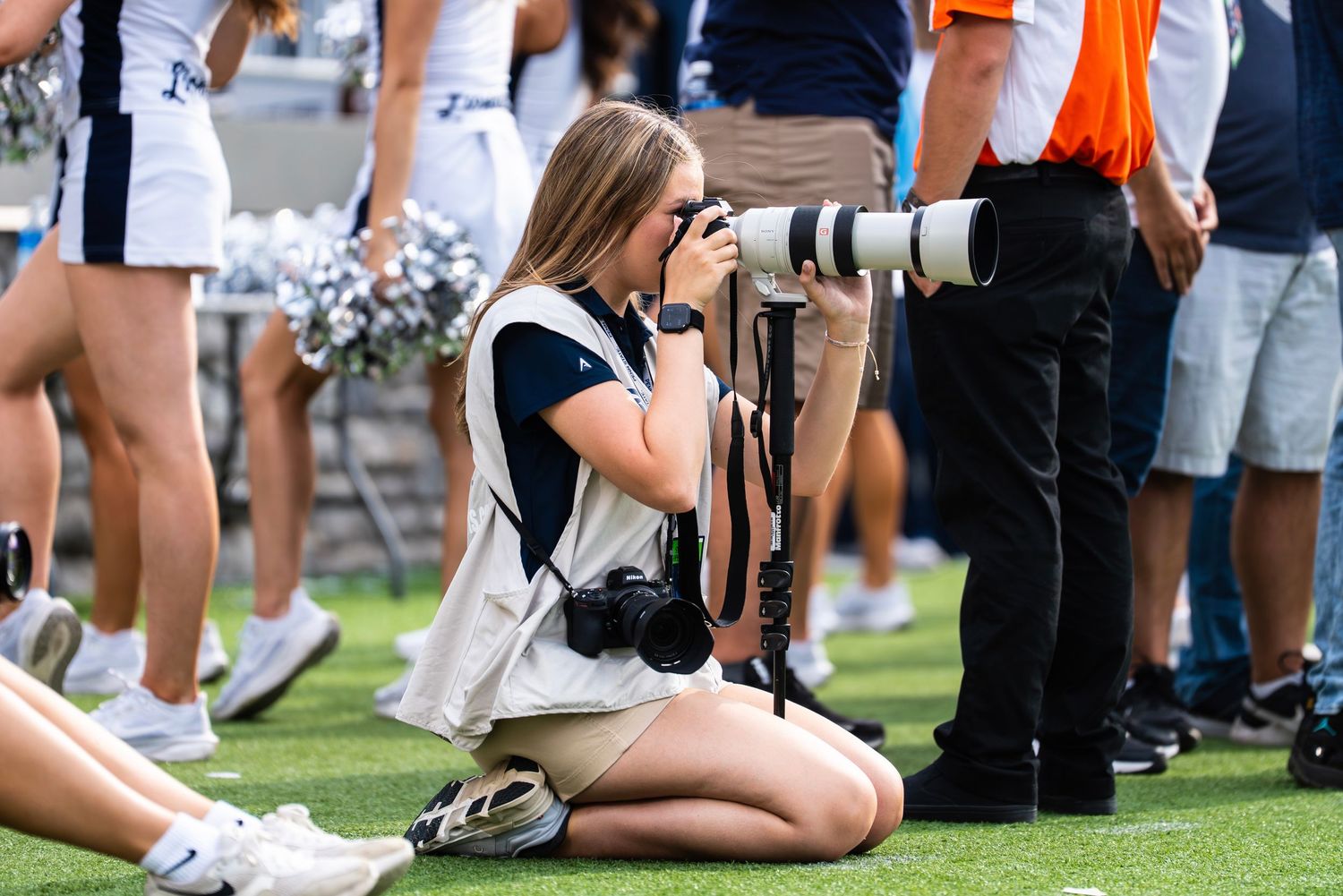
Working in sports as a woman is both empowering and challenging. It’s a field built on competition, energy, and passion but also one that’s been male dominated. Whether you’re a photographer like myself, a reporter on the sideline like friends of mine, or part of the marketing or operations team, being a woman in this space means constantly trying to find a balance between belonging and proving yourself.
One of the most fun parts about working in sports is having a front row seat to the action. As a photographer, I get to tell stories, capture emotion, and help shape how people see/experience the game. But it also means long hours, crazy and unpredictable schedules, and an environment where you may be one of only a few women in the room. That can feel isolating at times, and it often means working twice as hard to earn the same credibility automatically given to your male counterpart.
Still, the landscape is changing. More women are stepping into leadership roles and breaking barriers in sports. Organizations are slowly recognizing the importance of diverse perspectives, not just for equality’s sake but because it makes the industry stronger. When young women see others thriving in sports careers, it opens the door for them to imagine themselves there too.
Being a woman in sports isn’t just about loving the game; it’s about resilience, confidence, and using your voice even when it feels uncomfortable. It’s about showing up prepared and supporting other women. Every small step forward, every byline, photo credit, and successful event is helping to redefine what this industry looks like. The progress may be gradual, but each season brings more women to the field, the press box, and the front office and that’s something worth celebrating.
Blog 3
From Self-Taught to Schooled
For years, I thought I had photography figured out. I learned by google searches, watching YouTube tutorials, experimenting with lighting, angles, and editing until something just looked right. My friends and the internet were my teacher, and I also got a lot from trial and error. I took pride in that independence, in the creativity that came from trusting my eye instead of a manual.
Then I started taking photography classes. Suddenly, everything I gave a special name to had a technical name and sometimes worse, a completely different meaning. Concepts I’d instinctively used, like depth of field or leading lines, now had definitions, measurements, and proper techniques. It was enlightening, a little humbling, and overwhelming.
I remember sitting in class and hearing terms like “aperture priority mode” or “inverse square law” thrown around casually. I had used these ideas before, but I didn’t know what they were called or that there were “right” ways to apply them. For a while, that realization made me feel like an impostor, like my years of self-taught work didn’t count because I hadn’t been doing things “by the book.” They say there are no dumb questions, but it felt as though every question I had was dumb.
But over time, I realized that formal learning doesn’t erase creativity.
Understanding the theory behind my instincts gave me control and confidence. It allowed me to communicate my ideas better, to analyze my shots with more precision, and to appreciate the craft on a deeper level.
Still, there’s a strange nostalgia for the freedom of not knowing. When you’re self-taught, you shoot from intuition, when you’re trained, you shoot with awareness. The real challenge and the real beauty are learning how to balance both. To hold onto that curiosity while also embracing the technical side that turns good photos into great ones.
In the end, photography isn’t just about knowing the rules, it’s about knowing when to break them.